In Splatoon’s competitive world, comms and mental strength are key. Players often talk about their communication skills on sites like sendou.ink. Phrases like “can VC and know callouts” are common in free agent posts. For example, Jaguar² looks for a team that values “minimal tilt and healthy mindsets.” This shows that top teams focus on comms and mental toughness from the start.
Knowing what makes great comms is important. In intense games, every word matters. Instead of saying “There’s someone over there,” a skilled player might say, “Sniper catwalk, half charge.” This clear information can greatly improve gameplay.
Instead of getting upset over a death, they give useful tips: “Zap low left pillar, one shot.” This section will look at the details of effective callouts. We’ll focus on who, what, where, and the small plans that can shift the battle’s outcome.
The tone of voice is also key in the mental game. A calm, factual tone can stop tilt from spreading. The need for players who can “VC” and “know callouts” is seen across all levels. By studying pro scrim recordings, we’ll show how a timely call can win a fight. Great comms show a team that trusts each other. For more on shotcalling, check out this resource from Red Bull Esports.
Callout Taxonomy & Short Codes
The language of competitive play relies on a clear callout system. Without a common language, communication can quickly turn into confusion. This section focuses on creating a strict callout taxonomy that all teams can follow. We start with four key categories: enemy positions, objective status, resource tracking, and teammate intent.
Each category is essential for clear communication during intense games. For example, knowing enemy positions helps players understand where threats are. Objective status informs the team about game goals. Resource tracking shows specials, subs, and ink levels. Teammate intent clarifies each player’s next action.
To improve communication, we use short codes—our quick protocols. For instance, saying “L3 half, no cooler” tells a lot about enemy support and their lack of a defensive special. This clarity is key in fast-paced matches.
We draw from data on common weapon nicknames to create a universal codex. Terms like “Hedit” for Heavy Edit Splatling and “vheavy” for vanilla Heavy Splatling will become familiar to your team. We also introduce stage-specific landmarks like “catwalk,” “elbow,” and “dip.”
Practicing these protocols until they become second nature is key. When a backline player says, “Pen left plat, full charge,” teammates should know exactly what’s happening. This clarity is vital for effective IGL shotcalling and mid-round adjustments, making every word count.
| Category | Example Callout | Purpose |
|---|---|---|
| Enemy Position | L3 half, no cooler | Indicates enemy’s location and resources |
| Objective Status | Zone capped | Informs team of game objectives |
| Resource Tracking | Two specials ready | Updates team on available resources |
| Teammate Intent | Flanking left | Clarifies player’s planned action |
This taxonomy is more than just callouts; it’s the base for effective communication in competitive play. By adopting these protocols, teams can make sure every word helps their strategy.
IGL Tools: Mid‑Round Plans & Win Conditions
In the fast-paced world of competitive gaming, the In-Game Leader (IGL) plays a key role. An IGL is more than just the loudest voice; they are the strategist. They make quick decisions and direct actions in real-time. This section gives IGLs the tools they need to make effective mid-round plans and identify clear win conditions.
The “OODA loop” is a valuable framework for IGLs, adapted for games like Splatoon. It has four key steps:
- Observe: Analyze the HUD, kill feed, and map control.
- Orient: Compare the current situation to your team’s strengths.
- Decide: Call a micro-objective based on your analysis.
- Act: Execute the plan with a clear timing cue.
For example, a mid-round plan might be: “They’re down a slayer, we have cooler—push zone with triple bomb, then collapse on their backline.” This kind of directive is key for exploiting the enemy’s weaknesses.
Win conditions are specific scenarios that your team is designed to exploit. A classic example is: “We win when we get a pick with Zooka and then shark the flank.” Knowing these conditions helps teams focus their strategies.
Looking at team profiles from sendou.ink shows how different compositions need unique IGL calls. For example, the DistInkt team, which often plays without a cooler, highlights the importance of adaptability. An IGL must quickly adjust strategies when a plan fails, keeping calm and focusing on the next win condition.
Aspiring IGLs should aim to turn scattered information into decisive, game-winning calls. They must also lead under pressure without placing blame on individuals during critical moments. This approach creates a positive team environment and boosts performance.
Debriefing Without Blame
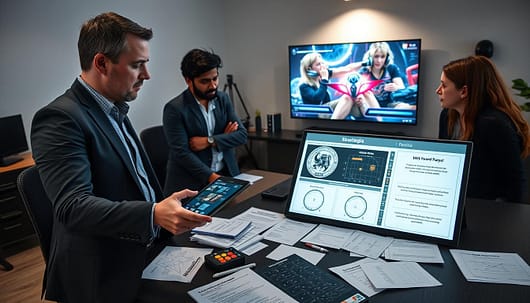
How a team talks after a game is key to its mental strength. The moments right after a game are critical. They decide if the team will grow or break apart. A well-structured debriefing process is vital for a positive outcome.
This method, called debriefing without blame, has three main steps:
- Facts First: Start by sharing only the facts. For example, “We lost zone control at 60 because their slosher flanked from right drop.” This step keeps emotions out, focusing on what happened.
- Impact Analysis: Then, look at the situation’s impact. Ask, “What did that cost us?” and “Was this a pattern?” This helps the team see the big picture.
- Forward Fix: Last, come up with a plan for the next game. For instance, “Next time, our support will check right drop every 30 seconds and call it.” This ensures the team leaves with a clear plan to get better.
Teams like Glorps, Full Whiteout!, and Anxiety Society stress the importance of staying positive. Player “yosoy” has pointed out the need for kindness and coping skills. These are not just good traits; they’re essential for a team that wants to get better.
Dealing with post-game frustration can be easier with this method. The IGL or captain plays a big role in setting a positive tone. By keeping the team’s mental game strong, even after a tough loss, they can come back stronger together.

Calm Protocols Under Pressure
High-stakes moments show a team’s true communication habits. Teams like Anxiety Society show the value of staying calm, even when it matters most. Player “SLiMES” shows that listening, even when you can’t speak, is key to team success. This shows the need for clear and focused communication under pressure.
As time runs out and tension grows, having set mental and verbal routines is key. The “Reset Breath” technique is a great tool. It signals the team to clear their minds and refocus with a single, audible exhale. Using a “Pressure Comms Template” helps keep calls simple, like “Two down, push now.” Practicing these in low-stakes games makes them second nature when it counts.
The IGL’s role is vital in these moments. A steady voice can keep the team grounded, even when under pressure. Saying things like “We’ve been here before, stick to the plan” helps players stay focused. It’s important to avoid blame or panic to keep the team calm. By setting these protocols, teams can turn chaotic moments into controlled actions, gaining an edge in competition.
For more on managing emotions and communication, check out this resource from Psychology Today. Using these calm protocols can greatly improve team performance, even in the most intense moments.