In the world of tactical first-person shooters, knowing how to use resources is key to winning. The buy phase is a 15–20 second window where teams spend their money on weapons, armor, and more. Games like Counter-Strike 2 and VALORANT show how important this phase is.
During this time, players face many choices. They must think about bonuses for winning rounds, rewards for kills, and more. For example, winning a round can bring in a lot of money, but losing might not be as rewarding.
Learning these strategies helps teams plan their buys and saves better. It’s like making decisions in sports, where being too confident can lead to mistakes. Just like NFL teams might overvalue draft picks, FPS players might choose the wrong weapons at the wrong time.
Professional matches show how top teams use their economy to gain an edge. To learn more about managing your money in competitive play, check out this article on managing your money in competitive play.
Force vs. Save Decision Tree
Knowing the difference between a force buy and an eco round is key for your team’s success in FPS games. Choosing the right strategy is vital for staying ahead of the competition.
A force buy means spending a lot, even when you don’t have much money, to try and win the round. On the other hand, an eco round is about saving money to have more for later. This choice can range from semi-buys to light buys.
When deciding, consider these factors:
- Current Team Money: Check how much cash your team has.
- Loss Bonus Tier: Know your team’s loss bonus to see how much you can buy later.
- Opponent’s Projected Economy: Guess what your opponents can afford.
- Map Side: Think about the benefits or drawbacks of your current side.
- Round Significance: Figure out how important this round is, like in match point situations.
For instance, after losing a pistol round, your team might get a $1,900 loss bonus. You then need to decide if you can buy a Galil or Spectre and armor. Choosing wisely can help you win more.
Be careful of the “loser’s curse.” This is when teams spend too much out of frustration, which can hurt them in the long run. Avoiding this can help your team make better choices over time.
By the end of this, you’ll know how to make smart eco decisions. The goal is to improve your team’s economy while keeping your long-term strategy in mind.
Armor/Util vs. Upgraded Pistols
In low-economy rounds, choosing between armor or an upgraded pistol is key. Players need to weigh their options carefully. They must decide if investing in Kevlar for more health is better or if a powerful pistol like the Deagle is the way to go.
Kevlar, priced at $650, greatly increases survivability. It can turn a deadly shot into a survivable one. This is very important when facing opponents fully equipped. The Deagle, costing $700, has high variance. It can lead to amazing multikills but also misses.
Utility is also important in these choices. A smoke grenade, priced at $300, can block enemy views and help teammates. This is key for support players who help the team plan. For those who like to lead the charge, getting armor might be the smarter choice.
In games like VALORANT, the Sheriff is a good middle ground between the Deagle and other pistols. The P250 in CS2 is another option that saves money but keeps players competitive. These choices show the importance of adapting purchases to fit the team’s needs.
It’s also important to avoid the overconfidence trap. Many players think they can always get headshots with a Deagle, forgetting the value of armor. By understanding Economy & Buy Rounds (FPS), players can make choices that help them win the game.
Bonus Round Math
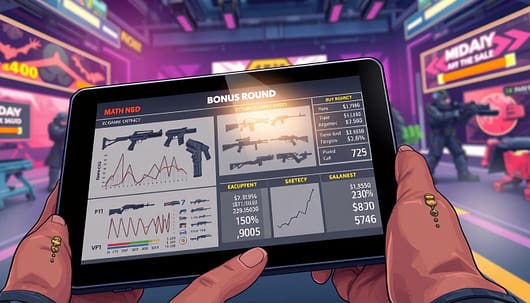
The bonus round is a critical moment in a match. It’s where smart math can change the game. Knowing the economics of this round is key to your team’s success. Winning can hurt your opponent’s finances, while losing can reset your team’s money status.
To make smart choices in the bonus round, consider these important points:
- Probability of Winning: If you have more than a 40-45% chance of winning, it’s worth taking the bonus.
- Weapon Advantage: Having SMGs and rifles can give your team a big advantage.
- Opponent’s Strength: Look at your opponent’s full-buy abilities to understand your chances.
- Round Loss Bonus Reset: Remember, losing can reset your team’s round loss bonus.
Studies from pro leagues show teams that use bonus rounds well can win 5-8% more rounds over a series. This advantage grows over time, similar to how later NFL draft picks often outperform earlier ones due to market inefficiencies.
By using this calculator-ready method, players can decide when to take the bonus and when to save for a full buy. For more on loadouts, check out default vs. custom loadouts.
Teamwide Buy Sync & Punishing Desync
In competitive FPS games, the buy phase is key. It can change the game’s outcome. Synchronizing buys is vital for a strong economy and firepower.
A unified buy strategy boosts your team’s strength. It lets you use your weapons and utilities better.
When buys don’t match, it weakens your team. For example, if one player has a rifle and others have pistols, you’re at risk. Opponents can attack you hard and control the map.
It’s important to spot enemy desyncs. Listen for sounds, check the kill feed, and use economic clues to find out when they’re not in sync.
Good communication during the buy phase helps your team work together. Make sure everyone knows their loadout. Aggressive tactics, like A-site splits, can win you the game. Use utilities to isolate and take out opponents who are out of sync.
Mastering buy sync turns the buy phase into a strategic advantage. A unified approach avoids risks and strengthens your economy. Use your buys to outmaneuver your opponents.