Imagine treating game audio like elevator music while enemies are literally telegraphing their every move. I’ve watched more players get domed than I can count. They’re laser-focused on their crosshair while ignoring the symphony of destruction happening around them.
Those subtle sound cues are your early warning system – the canary in the coal mine of competitive gaming. Remember that scene in The Matrix where Neo starts seeing the code? That’s what proper audio recognition feels like.
We’re talking about distinguishing friendly footsteps from enemy ambushes, or locating opponents through gunshot echoes. It’s about developing what I call acoustic literacy – reading the soundscape like a tactical map.
This isn’t just gaming theory either. Research shows how auditory cues significantly improve tracking performance in complex environments. The difference between victory and defeat often comes down to who’s actually listening.
Tuning Audio Settings
Ever wonder why your $300 headset sounds like a tin can radio at a construction site? You’re not alone. Most players just click accept without checking the audio settings.
Valorant’s audio settings are your secret weapon. They help you hear footsteps and understand where they’re coming from. It’s not about turning everything up to eleven. It’s about making sure important sounds are clear.
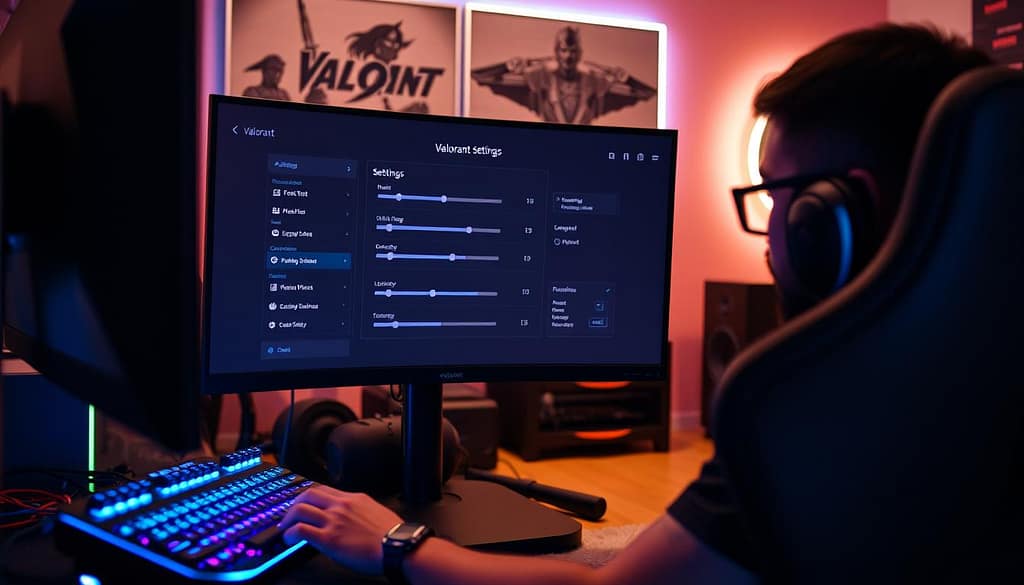
Let’s break down the audio menu like it’s the Pentagon Papers. These sliders control your competitive advantage more than any rifle in your arsenal.
The Core Audio Trinity
Master Volume sets your foundation. Think of it as the base layer of your auditory cake. If it’s too loud, you’ll miss team comms. If it’s too quiet, you’ll miss footsteps.
Sound Effects volume is where the magic happens. This controls everything from ability sounds to weapon reloads. But most importantly, it governs footsteps – the bread and butter of competitive play.
Voice Chat volume needs careful balancing. You want to hear your team’s callouts without drowning out environmental audio cues.
| Setting | Recommended Range | Impact on Gameplay | Pro Tip |
|---|---|---|---|
| Master Volume | 70-80% | Overall sound balance | Set first, adjust others relative |
| Sound Effects | 90-100% | Footsteps and abilities | Prioritize this for info gathering |
| Voice Chat | 60-70% | Team communication | Loud enough to hear, quiet enough to not overwhelm |
| Music Volume | 0-10% | Menu and round music | Nearly mute during actual gameplay |
Valorant’s sound designers built environmental audio regions that match the level layout. This means footsteps sound different on metal, wood, and concrete. Your settings need to highlight these differences.
The sweet spot? Voice chat that doesn’t drown out footsteps. Ability sounds that are distinct but not overwhelming. It’s like conducting an orchestra where every instrument has its moment to shine.
Remember: good audio settings don’t just make the game sound better. They make you play better. When properly tuned, you’ll hear enemies before you see them – and in Valorant, that’s half the battle won.
Differentiating Enemy from Team Sounds
Your headphones are now a secret weapon in virtual battles. That faint sound in the distance? It could be your teammate’s reassuring voice or an enemy’s sneaky move. Knowing the difference could save your life.
Enemy footsteps sound different, like a bad promise. They’re sharp and tense, warning you of danger. Team sounds, on the other hand, are warm and calm, like your favorite podcast.
The key moment is right before you see them. Enemies make unique sounds and move in ways that alert you. This knowledge helps you avoid mistakes and hit your mark.
Learning these headset tips turns noise into useful information. You’ll guess enemy moves before they happen. This skill makes you a better player, always ready for action.
It’s like learning to tell Mozart from Metallica in a loud room. Once you can, you’ll never mix up friends and foes. These small audio clues become your best allies, helping you plan your next move.
Timing Pushes With Audio
What if I told you the best push strategy doesn’t come from your eyes, but your ears? Audio intelligence is key. It’s what makes a player tactical, not just reactive.
Think of sound cues as your personal reconnaissance team. That distant reload noise? It’s your green light. Those ability activations near the site? That’s their defensive setup revealing itself. Each audio clue paints part of the enemy’s tactical picture.
Valorant’s rain-drenched Seattle maps taught me something important: environmental sounds matter. Rain creates acoustic cover but also shows movement patterns. The smart player listens through the weather, not just around it.
Here’s how to turn random noise into structured intelligence:
- Track ability cooldowns through audio cues
- Coordinate pushes during enemy reload sequences
- Use footsteps to gauge rotation timing
- Listen for ultimate activation tells
- Identify weapon switches as engagement opportunities
Surround sound setups give you a strategic advantage. Pinpointing sound sources accurately lets you react fast. It’s like having sonar in a submarine battle – you’re navigating by what you hear, not just what you see.
The concept works across shooters too. Our Call of Duty sound cue guide shows how audio intelligence translates between tactical games. The principles remain consistent, even when the weapons change.
Timing pushes with audio isn’t just about hearing – it’s about interpreting. That reload sound across map? Three-second window. Those footsteps retreating? Rotation opportunity. Each sound becomes a data point in your mental clock.
Master this, and you’ll find yourself pushing not when you think you should, but when the audio tells you to. It’s the difference between playing checkers and chess while everyone else is playing musical chairs.
Avoiding Audio Overwhelm
Game audio designers are like modern-day magicians. They use sound tricks to make you focus on what’s important. They hide footsteps under other sounds because our brains can only handle so much.
Think of your audio settings as a traffic controller. The master volume is your baseline. Sound effects are your priority, and voice chat is a detour. Too many players make every sound equally important, like trying to read War and Peace in a storm.
It’s not just about game settings; it’s about how our brains work. Just like auditory sensitivity challenges in real life, we need filters to sort out sounds. The sound of a sniper rifle is more important than background noise.
Learn to tune out unnecessary sounds. Ignore the background noises and focus on where enemies are. The sound of enemy footsteps is key, while other sounds can be ignored.
True audio mastery is about knowing when to let sounds fade. This lets the game’s important moments shine. Your ears should be like an editor, cutting out everything but the most important sounds.