Let’s get one thing straight. If you think utility in gaming is just about “things that go boom,” you’re missing the point. That frag grenade in your hotbar? It’s like the toothpick on a Swiss Army knife you haven’t even opened yet.
My time in games like DayZ taught me a hard lesson. True tactical advantage comes from understanding the game’s logic. Think of it as three levels of violence: immediate throwables, environmental chaos-makers, and strategic game-enders. It’s not just about words. It’s about the fight’s logic.
Take a 40mm smoke round for example. It doesn’t deal any health damage, but it blocks information in a five-meter radius. That’s the key idea. Real utility is about control—denying space, playing mind games, and changing the game’s flow. It’s the precision of a scalpel, not the brute force of a sledgehammer.
This idea applies to many games. Just look at the wide range of utility items that have shaped game worlds, from Boogie Bombs to Shockwave Hammers. Are you just looking for the biggest explosion? Or are you ready to learn how to control the game?
In-Game Examples
The recent Call of Duty update did more than just tweak numbers. It changed the game’s core. Patch notes help us understand what the developers aimed to do. They show us the game’s inner workings.
Let’s look at the changes. The Battle Ready Wildcard got a big update. It now has a Supply UAV and a Utility Box instead of a reconnaissance UAV. This change wasn’t just a small tweak. It changed the game’s focus from gathering intel to a sustain-oriented role.
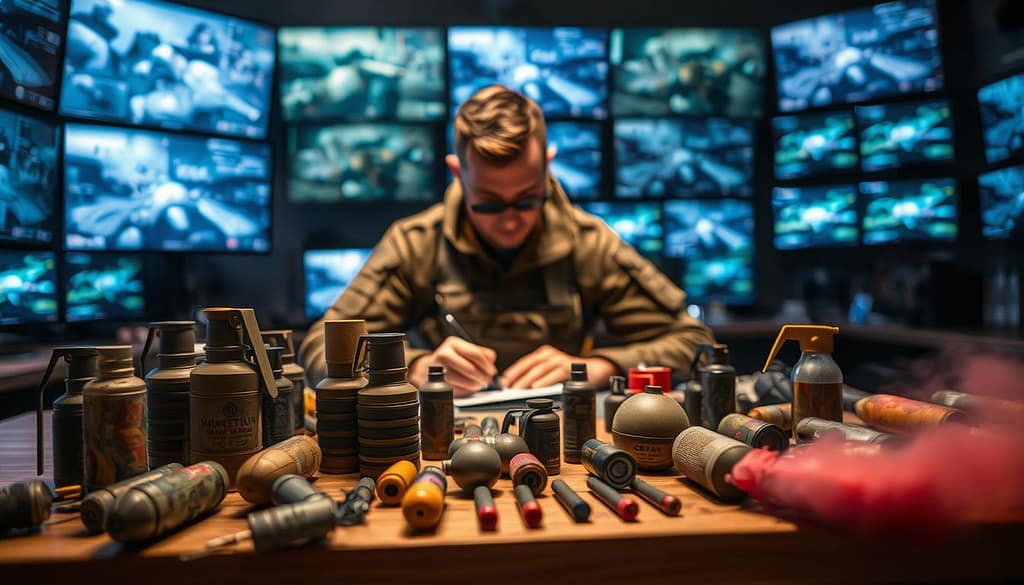
The update shows us that the most powerful throwables aren’t always the ones that explode. Instead, they’re the ones that help your team get more ammo in the middle of a fight. This makes the game more about holding ground and keeping the pressure on.
Other updates also point to this change. The Munitions Box now gives you max ammo for your current weapons. This is a smart way to upgrade. Even the utility items are getting an AI helper. The Grenadier Perk fix is also important. It makes explosives work better at slowing down enemies.
These updates aren’t random. They’re carefully made to change how the game is played. This shows a pattern seen in other games too. For more on equipment analysis, check out this Chimera Squad breakdown.
DayZ’s grenade stats also show the importance of thinking ahead. A grenade weighs 230 grams and takes up 2 inventory slots. Its sound can be heard from 10 meters away. Each detail is a choice that affects the game.
Carrying throwables is a big decision. It’s a trade-off between quick power and staying alive longer. Using them is a careful choice. This idea applies to all utility gear.
| Utility Item | The Change | The Meta Intent |
|---|---|---|
| Battle Ready Wildcard | UAV swapped for Supply UAV & Utility Box | Shift from reconnaissance to team sustain and prolonged aggression. |
| Munitions Box | Now provides max ammo for carried weapons only. | Promotes smart, efficient resource management; reduces waste. |
| Grenadier Perk | Fixed to reliably slow enemies hit by explosives. | Enhances area denial and crowd control capabilities of throwables. |
Ignoring these updates is like trying to apply philosophy in a physics lab. The theory is clean, but the practice is messy. The proof is in the patch notes. They teach us how to think about these throwables. Not just as tools, but as levers that change the game.
Creating Advantages with Throws
Most of us treat our frag grenades like lottery tickets. We throw them at a red dot on the map, hoping for a miracle. But we usually get nothing. We want to use them better.
Change your mindset. See your grenade as a conductor’s baton, not just a weapon. Aim to force an error, not to kill. This is high-level strategy.
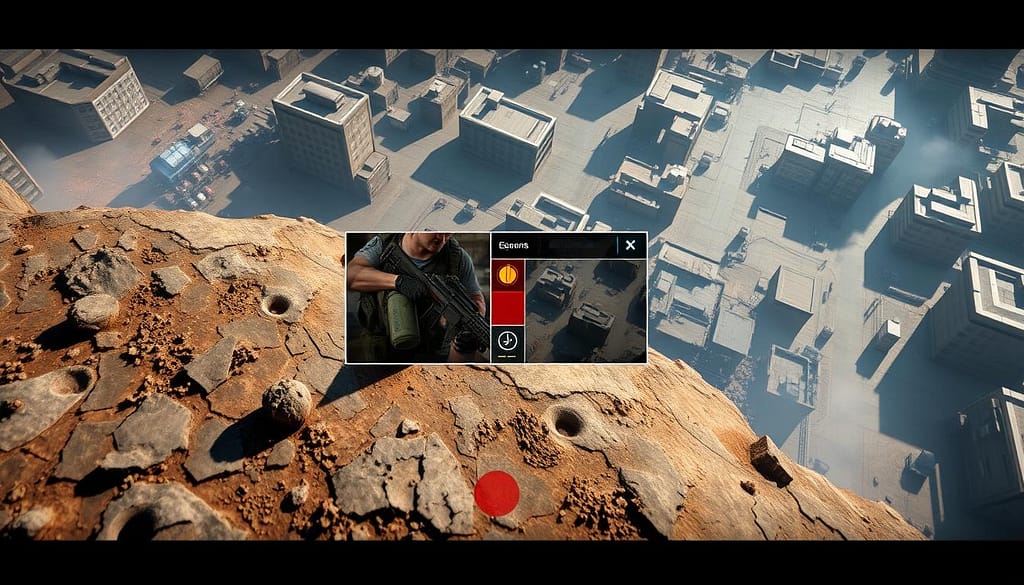
Think about a rock someone’s hiding behind. A bad player throws a frag grenade at it. A Sage throws it behind it. The explosion isn’t the main event; it’s the forced movement.
This is where synergy comes in. A flashbang isn’t just an explosion. It’s the start of a push. It’s the cover for a desperate revive. Your well-placed frag grenade doesn’t need to kill; it just needs to create a window for your team to move.
Tools are getting smarter. Remember the recent fix to the Grenadier Perk? It changed the game. Explosive damage now slows down enemies. Imagine scattering a team with a frag grenade and watching them struggle to move.
True advantage comes from layering these effects. A flash to disorient. A frag grenade to displace. A teammate pushing the angle. This isn’t random violence; it’s a tactical sequence.
The difference is everything. One approach hopes for a mistake. The other forces that mistake. It’s the difference between playing checkers and chess.
So next time you pull the pin, ask yourself: am I buying a lottery ticket, or am I writing the rules of the game? The answer will tell you everything about what kind of player you are. Are you a chaotic gambler, or an analytical Sage setting the board for a win?
Timing and Map Control
Static Buy Stations in Ranked Play are fixed to reduce randomness. This rewards players who know the map well. Map control is not just about holding ground. It’s about controlling time.
Your utility, like flashes, sets the pace. A flashbang is a tool for timing, not just for the start. It’s for strategic moments, like during a rotation at minute twelve.
It gives you a few seconds of safety. You control when and where to use it. A good nuke guide will tell you to plan first. Don’t waste a flash in an empty room. But, a well-placed flash in a sniper’s nest is worth it.
Knowing the right grenade lineups for retakes, like for Mirage, Inferno, and Ancient, is key. It lets you plan critical moments. You’re not just reacting; you’re scripting the game’s story.
Do you control the map, or does it control you? Your utility usage is the answer. It’s the difference between playing the game and writing its story.