Let’s clear up the confusion of war for a moment. Why do all strategists, from Sun Tzu to Star Wars fans, talk about the high ground? It’s not just a joke—it’s key to survival in any battle.
Having the high ground means you’re in control. It gives you a wide view, like looking down from above. You can see enemy plans and threats coming. You set the rules of the fight.
This isn’t just theory. The numbers show that units that control high map elevation do much better. It’s the first rule of winning in battle. In real life, securing the high ground is vital for safety. It gives you an edge and keeps your enemies at bay.
Taking and Holding Height
Your match isn’t decided in the final circle; it’s often dictated by your initial drop. Many teams treat the Jump Phase like a casual ride, only to find themselves in a low spot. They then spend the game looking up, a strategic mistake from the start.
The Jumpmaster isn’t just a pilot; they’re a real-estate speculator. They aim for high places like World’s Edge or downtown buildings. Landing in a good spot with cover, resources, and height sets the game’s pace.
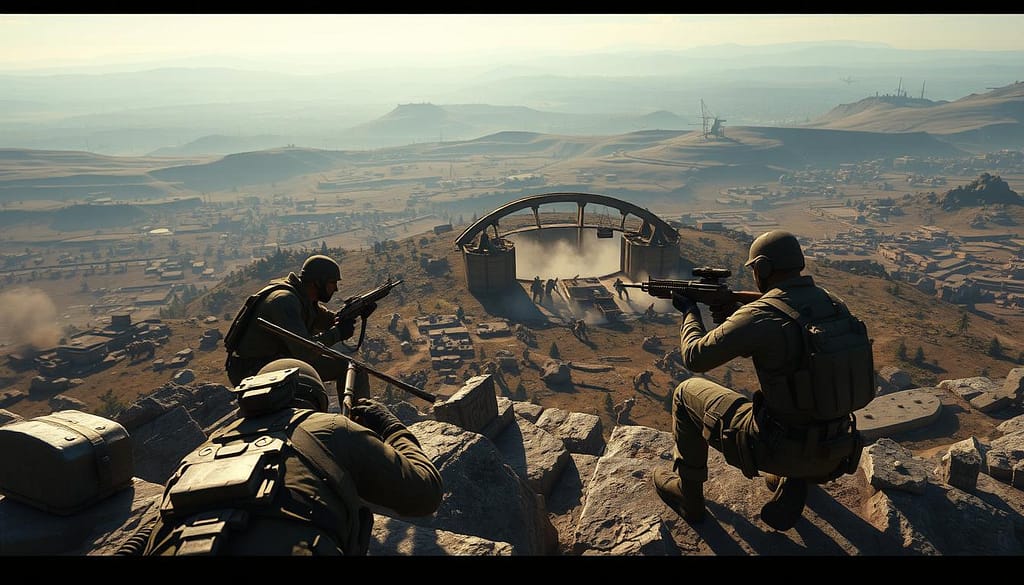
Getting to your high spot is just the beginning. Holding it is the tense drama that follows. It’s not about staying in one place. It’s about controlling the high ground.
Use your Legend’s skills or building mechanics to fortify your spot. Build a ramp for quick height gains or walls to block fire. You’re creating a strong defense, making your spot hard to reach.
Don’t get too comfortable, or a team will push you out. They’ll use grenades, skills, or find the high ground above you. You must always defend your spot with sightlines, area denial, and threats.
Countering Enemy Elevation
Looking up at an enemy in a tower feels like a medieval siege. Your first instinct is to charge up, but they’re counting on that. It’s a psychological trap in the game.
First, assess the actual threat. Is the tower really a danger, or just a lone player? Listen for sounds like footsteps or shield swaps. This helps you know what’s going on.
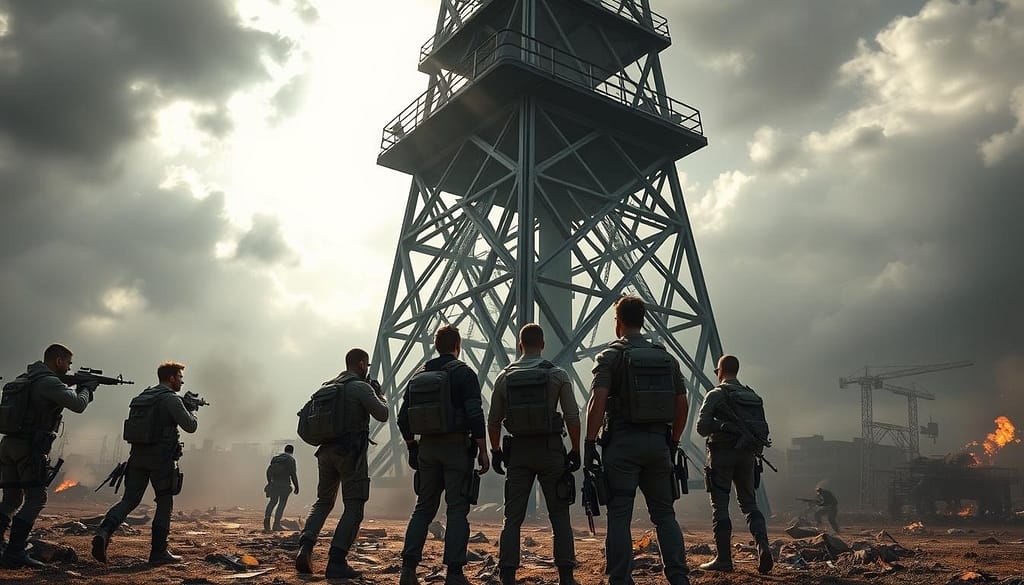
After figuring out the problem, you need a smart plan. Don’t rush in like a fool. Use the environment to sneak up on them. This way, you can break their line of sight and control.
The key to beating High Ground Control is to create new battlefields. Try using an Octane pad to jump to a rooftop. Or, use a Wraith portal for a sneaky approach. A wide, patient flank can turn their fortress into a trap.
Here’s a breakdown of your strategic toolkit when facing elevated positions:
| Strategy Type | When to Use | Key Execution | Risk Level |
|---|---|---|---|
| Flanking Maneuver | Enemy is static, focused on one approach. | Use natural cover for a wide rotation; strike from an unexpected 90-degree angle. | Medium |
| Environmental Manipulation | You have legend abilities like Horizon’s lift or Pathfinder’s zipline. | Create a new vertical route that bypasses their firing lines. | High |
| Forced Displacement | The ring is closing, or you have zone advantage. | Use the closing circle as natural pressure; let the environment be your siege weapon. | Low |
| Strategic Disengagement | You’re outgunned, or multiple squads are nearby. | Quietly retreat and let another team attack first; become the third party. | Very Low |
Team communication becomes more tactical. Call out angles and coordinate attacks. This turns a disadvantage into a strong operation.
At times, the best move is to make their advantage useless. If you can’t take the High Ground Control, change the game. Use the ring’s closure to force them down. Lure another squad in, then clean up the mess. Playing patiently is not passive; it’s letting opponents do the hard work.
Remember, those towers and cliffs are not just for sniping. They’re also traps. A player up high often becomes predictable. Use sounds to track them and strike when they’re weak.
Countering elevation is about not playing your opponent’s game. Don’t give them what they want. Make the high ground a weakness through smart positioning and timing. The view might be theirs, but you can win.
Map Specific Hotspots
Theory is your guide. The real battle is where you put it into action. Each map has its own special layout and feel. Olympus’s old buildings are different from World’s Edge’s volcanic peaks.
True mastery of high ground isn’t one-size-fits-all. It’s about knowing the right spot on Kings Canyon’s rooftops during the third ring. It’s about finding the hidden hill behind a key spot that gives you an edge without the early fight. Your mind map needs to show the value of each area.
Here, knowing how spawns work and using the environment to your advantage is key. Forward spawn mechanics make certain spots hot targets as the game changes. A ledge on Yggdrasill Path or a lava pit on Hell’s Heaven is more than scenery—it’s a tool. Learning spawn rotations and map flow helps you guess where to attack, turning the terrain into a trap.
Seasons bring new maps and paths. Destructible walls, like those on Tokyo 2099’s Shin-Shibuya, change the game mid-match. Guides for games like Marvel Rivals show how control points change. Your knowledge must keep up. The player who knows the map like their neighborhood has a big advantage. They don’t just aim for high ground. They control the whole map.