Ever seen a well-planned push turn into chaos because someone said “he’s over there” instead of “Reaper top balcony with one shot”? I’ve been there too, looking at the defeat screen, wondering if my teammates were playing blind.
Effective team comms in games isn’t just about talking. It’s about creating a shared mental map of the battlefield. It’s like a well-orchestrated heist movie where everyone knows their lines and timing.
Studies show teams that game together work 20% more effectively. We’re not just shooting virtual bullets here; we’re building the same frameworks that make successful business teams thrive.
So why do we accept “I think I saw someone” as viable intel when we’d never tolerate that vagueness in a professional setting? The principles of clear team comms apply to both virtual and real-world collaboration.
Clear Callouts and Info Sharing
Ever notice how elite teams seem to share a single brain? It’s not magic – it’s skill built through practice. The key to success often lies in sharing important info quickly.
Think of Heat‘s famous bank heist scene. De Niro’s crew communicates with precision. Each word is important. This is the goal for us in gaming and effective workplace communication.
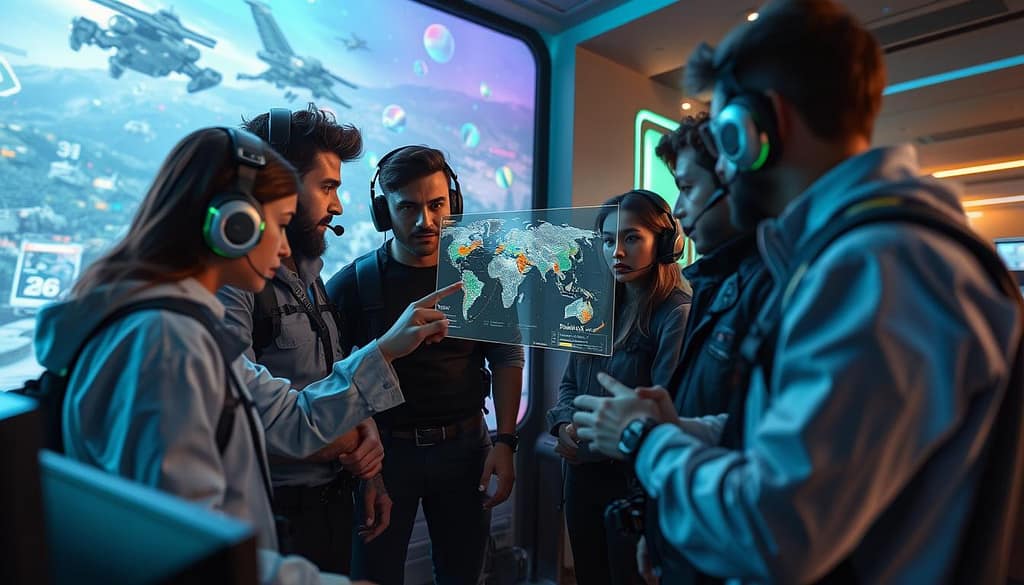
In Overwatch, clear communication makes a huge difference. Saying “McCree no flash” helps your team. Saying “some dude shot me” doesn’t.
The Bank Robbery team-building exercise shows this well. Everyone has puzzle pieces that make sense together. Your callouts are like these pieces, giving your team an edge.
Why do we focus on spray patterns but not communication? Your most powerful tool is clear communication, not just your ultimate ability.
Great callouts turn chaos into strategy. They create a shared language that makes things clear. Whether it’s a push or rotations, clear language is key to success.
Remember, keeping info to yourself is a waste. The best teams share info to get better together. Your insights become valuable when shared clearly.
In-Game Role Assignment
Ever wonder why some teams click while others crash and burn? It’s not about individual skill. It’s about knowing your place in the machine. A Missouri University study on World of Warcraft raids showed a truth we often ignore.
Successful coordination means everyone doing their specific job perfectly. Think about your last disastrous meeting. Was it the one where everyone wanted to be the star?
Gaming mirrors this perfectly. In titles like World of Warcraft and Final Fantasy XIV, role specialization isn’t optional – it’s essential. You have tanks, healers, and damage dealers each with distinct responsibilities.
The tank isn’t there for glory kills. Their job is creating space and absorbing damage. The support isn’t trying to frag out – they enable others to shine. This isn’t just game mechanics. It’s organizational psychology dressed in fantasy armor.
Why do we grasp role assignment better in virtual worlds than actual workplaces? The data shows successful raid teams correlate with virtual workplace success. The coordination required to down a raid boss translates directly to project management skills.
Here’s what makes role assignment work:
- Clear responsibilities – No confusion about who does what
- Specialized skills – Each role masters their niche
- Mutual dependence – Teams succeed or fail together
- Shared goals – Everyone works toward the same objective
The most dysfunctional teams are always the ones where everyone wants to be the DPS hero. It’s the gaming equivalent of that meeting where everyone talks and nobody listens. Proper role assignment creates harmony through structured coordination.
Next time you join a team, ask yourself: am I trying to be the hero, or am I playing my position? The answer might determine whether you’re celebrating victory or staring at a defeat screen.
Avoiding Tilt and Miscommunication
Ever notice how teams don’t just lose – they unravel? The silent treatment after a missed shot kills more games than actual skill gaps. It’s like watching a horror movie where characters stop talking right before the monster attacks.
Tilt isn’t about getting outplayed. It’s about communication breakdown under pressure. I’ve seen more teams disintegrate from one bad round than from genuine skill deficits. That moment when someone dies and goes radio silent? That’s the point where games transform from competitions into psychological studies.
The Faraway Kingdom exercise demonstrates this beautifully. When the working group stops updating the waiting group, anxiety builds until it sabotages everything. It’s like watching a heist movie where the getaway driver stops answering his radio – suddenly everyone’s sweating bullets.
Dark Souls teaches us that failure isn’t fatal. But failure to communicate about failure? That’s where the real damage happens. How many games have you lost not to better opponents, but to that awkward silence after a whiffed ultimate?
Monster Hunter offers the perfect counterpoint. When that Rathalos knocks you across the map, the veterans don’t go quiet. They call out “I’m down – watch the tail swipe!” That simple update transforms panic into strategy.
Resilience isn’t about never failing. It’s about failing loudly and clearly. The teams that survive tilt aren’t the ones with perfect aim – they’re the ones who treat communication like a life raft.
Next time you feel that frustration building, remember: your microphone isn’t just for callouts. It’s the emergency brake that stops the tilt train before it leaves the station. The difference between a bad round and a catastrophic loss often comes down to who’s willing to break the silence first.
Building Team Chemistry
Team chemistry isn’t something you find—it’s something you build. It comes from shared struggles and victories. Research shows that 45 minutes of gaming together can build more cohesion than traditional team-building exercises.
Why? Because in games like Among Us, you learn who holds up under pressure and who stays calm. In Overcooked 2, you’re not just making digital sandwiches. You’re learning to communicate without words and building trust.
It’s the difference between reading about teamwork and actually needing it. The best teams aren’t made of the best players. They’re made of players who support each other well. So, the real question isn’t whether you should game with your team. It’s what you’re waiting for? Start creating great team chemistry through communication today.