Ever found yourself in a digital standoff where you’re technically cheating the system while playing by its rules? Welcome to the wonderful world of tactical positioning. It’s where your character shows minimal exposure while the game thinks you’re fully protected.
It’s like finding a tax loophole in the gaming universe – completely legal but feels vaguely dirty. I’ve watched countless players get eliminated because they didn’t master this fundamental concept. Using environmental protection to their advantage is key.
The real magic happens when you position yourself behind objects like walls or vehicles. You peek out just enough to take shots while exposing minimal surface area. It’s the gaming equivalent of sticking your head in the lion’s mouth and hoping it doesn’t bite.
We’ll break down why this works, when it fails spectacularly, and how to turn what feels like an exploit into legitimate tactical superiority. For those looking to master specific techniques, our guide on advanced positioning strategies offers deeper insights into maximizing your combat effectiveness.
Safe Peeking Habits
Ever try that Neo lean from The Matrix only to find bullets don’t follow movie rules? Welcome to peeking reality, where showing too much skin can get you digitally buried. I’ve learned the three-second rule: if you can’t find your target in three seconds, you’re just watching.
Real tactical peeking isn’t about being fast. It’s about gathering information without being seen. You aim to know everything without showing anything.
Knowing where enemies will be is key. Anticipating their moves means you don’t have to adjust your aim at the last second. Your crosshair should be ready for them before they even show up.
Using height to your advantage is smart. Rooftops, ledges, and staircases give you a view without being seen. It’s not just about seeing more; it’s about being seen less.
Shoulder peeking is like a spy tool. Quick looks can trick enemies into showing their hand while you stay hidden. It’s like peeking through the glass at the snake exhibit.
Playing mind games is part of the strategy. Make enemies think you’re somewhere you’re not. Use bait shots, create distractions, and master misdirection. Sometimes, the best peek is the one they never see.
These methods turn head glitching techniques into a strategic art. Good peeking habits make you the hunter, not the hunted.
Using Terrain and Objects
Forget what your kindergarten teacher told you—climbing on everything is absolutely encouraged here. The battlefield isn’t just a pretty background; it’s your tactical Swiss Army knife waiting to be deployed.
Think of yourself as a digital MacGyver turning dumpsters into fortresses and cardboard boxes into sniper nests. That slightly tilted lamppost? It could be cover. That destroyed vehicle? It’s a great spot to defend.
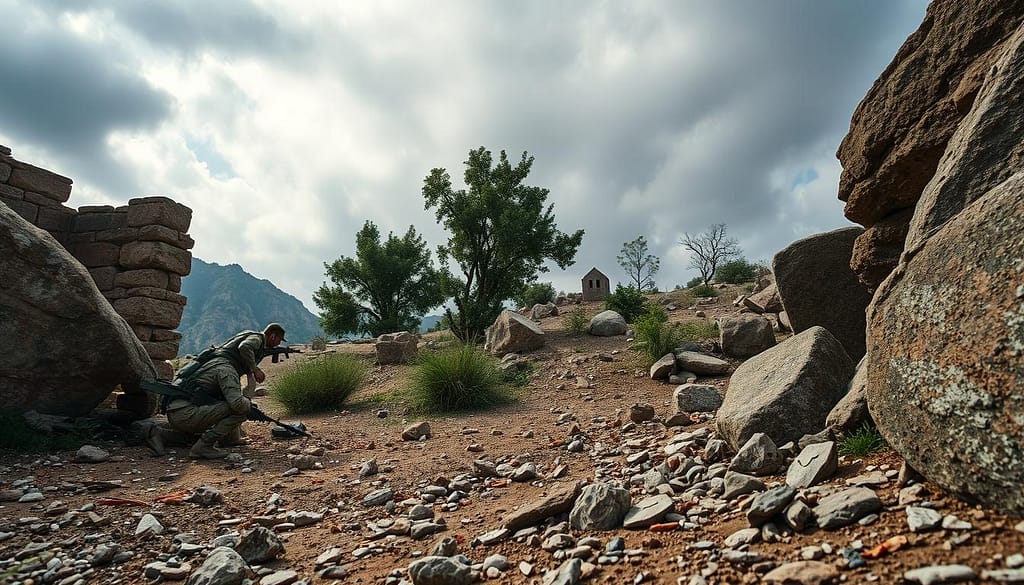
Remember that iconic ‘300’ scene with the phalanx formation? We’re doing something similar, but with fewer abs and more abandoned cars. The idea is the same: use what’s around you to create strong defensive play spots.
High ground isn’t just a nice-to-have—it’s your golden ticket. Being up high gives you better sight and makes enemies aim up, which messes with their aim. It’s like making them play basketball while standing in a hole.
Here’s how different terrain features can change your defensive play strategy:
| Terrain Feature | Defensive Advantage | Strategic Application |
|---|---|---|
| Elevated positions | Better visibility and aiming angles | Control choke points from above |
| Destroyed vehicles | Partial cover with multiple angles | Create temporary fortifications |
| Natural choke points | Forced enemy movement patterns | Set up ambush positions |
| Urban debris | Unexpected cover opportunities | Improvised defensive positions |
Reading the battlefield becomes second nature when you treat it like a chessboard. Find natural choke points before enemies arrive. Map escape routes before you need them. Find angles that give you the advantage before the first shot even fires.
True mastery comes from creating cover where none apparently exists. That stack of crates isn’t garbage—it’s your ticket to survival. That narrow alley isn’t a death trap—it’s a perfect ambush point waiting for your genius touch.
The best defensive play isn’t about hiding—it’s about controlling the engagement on your terms. You’re not avoiding fights; you’re choosing where and how they happen. Now go turn that battlefield into your personal playground.
Countering Cover Tactics
Great job on mastering defensive play! Now, let’s talk about how to take down everyone else’s safe spots. Countering cover tactics is more than just shooting. It’s about outsmarting your opponent with clever moves and precise planning.
Think of that kid who always found everyone in hide-and-seek? That’s your new role. I’ve developed strategies to chase campers out and turn their safe spots into traps. The secret is finding the weak spots in cover, just like the Death Star’s exhaust port.
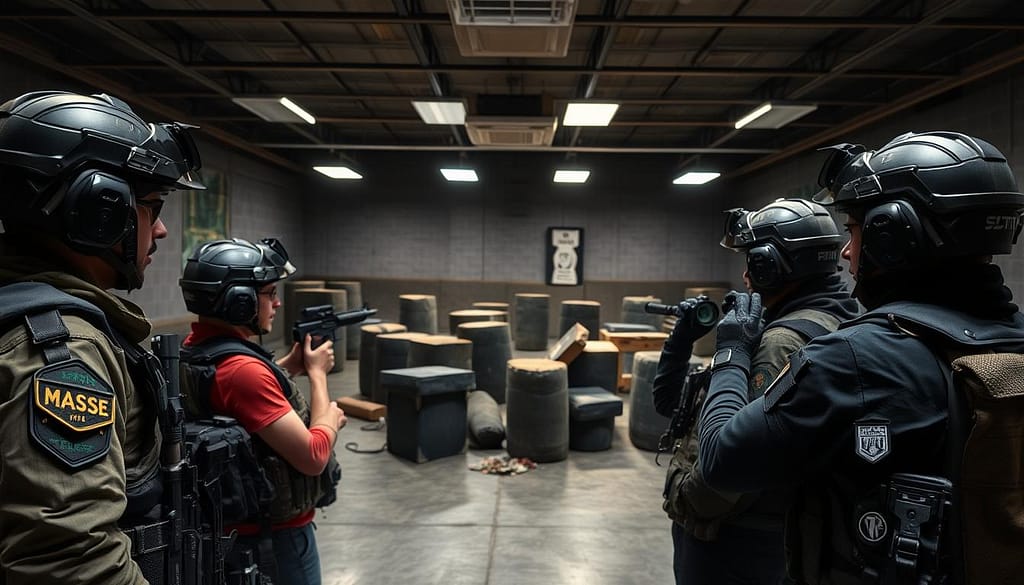
There are two main ways to do this: crossfire and distraction. With the right setup and teamwork, you can trap enemies in crossfire. They might seem safe from one side, but they’re exposed from another. This makes it hard for them to defend and gives you a clear shot.
Distraction plays work in a similar way. A teammate’s clever diversion can give you a chance to shoot. It’s like a magician’s trick, where the enemy focuses on the obvious while you sneak in the real attack.
Grenade banking is a useful tool. It lets you hit enemies who think they’re safe by bouncing grenades off walls. It’s like a bank shot in pool, where the indirect path is often the best.
Suppression fire is also key. It keeps enemies pinned and creates pressure. The constant fire makes them feel trapped in their cover, leading to mistakes. This tactic works well with focus fire tactics we’ve talked about before.
The best way to counter cover isn’t always to attack head-on. Sometimes, it’s about making their safe space feel unsafe. With smart planning, clever positioning, and psychological tactics, you can turn their advantage into a weakness.
Ethical Use in Competitive Matches
Mastering advanced peeking feels like unlocking a cheat code. But in competitive play, it’s a moral minefield. I’ve seen players blacklisted for less—tournament rules often blur the line between tactical innovation and outright exploitation. Is it fair to use every edge? Absolutely, but only if you’re not breaking the game’s spirit.
Sportsmanship separates legends from villains. Think James Bond versus a Bond villain—both get results, but only one earns respect. In high-stakes matches, staying calm under pressure is non-negotiable. Your heart races, shots go wild; deep breaths keep you sharp. Ethical peeking means winning without becoming the player everyone reports.
Follow unwritten codes: avoid exploits, respect opponents, and play with honor. Because in the end, being invited back for sequels beats a temporary win.