We’ve all been there. That moment when your Splatoon team forgets how to ink turf. When Pokemon’s RNG gods decide your perfect strategy deserves a critical hit to the face. When Smash Bros matchmaking feels personally invested in your suffering.
This isn’t just frustration – it’s the gamer’s existential crisis. That sinking feeling when digital outcomes trigger very real emotional responses. Why do pixels on a screen make us question our life choices?
Different games breed unique flavors of despair. Pokemon’s calculated probabilities versus Smash’s human-factor chaos. Same monster, different masks. Recognizing these patterns becomes your first anti-tilt strategy.
Consider this your tactical therapy session. Because understanding the enemy in your own head is half the battle won.
Mental Recovery Techniques
Have you ever seen pro gamers bounce back from a tough game like nothing happened? They’re not emotionless robots. They’ve just learned how to handle their emotions well.
The real secret to winning isn’t avoiding getting upset. It’s about recovering faster than your opponent. This way, you can get back in the game quickly.
I learned this the hard way after throwing many ranked games. The difference between a long rage quit and a quick reset is having the right mental tools.

Let’s talk about the 10-second breathing reset. When you start to feel upset, try this:
- Inhale for 4 seconds (no, not like you’re about to scream at your monitor)
- Hold for 2 seconds
- Exhale for 4 seconds
This isn’t just yoga class stuff. It’s a way to calm down your body. I’ve used it a lot in Counter-Strike.
Cognitive reframing is another technique. Instead of saying “my team sucks”, say “what can I do differently?” This helps you focus on solving problems instead of feeling stuck.
Different games need different ways to recover. In MOBAs, use the time between deaths to calm down. In fighting games, the pause between rounds is your chance to reset. And in battle royales, the long drop from the bus is a great time to catch your breath.
Always watch for warning signs like a clenched jaw or muttering curses. Catching these early can help you win the battle. Building mental resilience means learning to handle stress when it comes.
How fast you recover is just as important as how fast you respawn. Mastering both will help you climb the ranks while others are struggling.
Pre-Game Routines to Manage Stress
Have you ever wondered how Navy SEALs get ready for battle? They have special routines. So, why shouldn’t you have one for gaming?
My pre-game routine is called the “Tilt-Proof Protocol.” It’s a mix of getting ready and mentally preparing. It’s like a shield against stress.
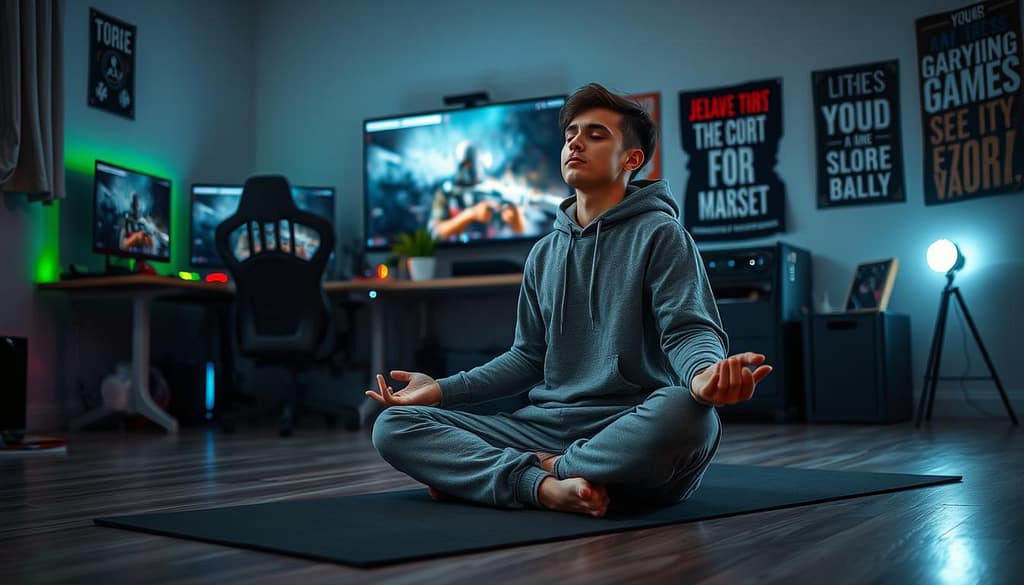
First, I do some warm-up exercises. These help me feel more confident. My routine includes:
- Precision drills for small wins
- Movement exercises for muscle memory
- Scenario practice for real game pressure
But the real magic is my playlist. Music affects our emotions. Happy songs boost my mood, while calm ones help me relax. It’s like a battle plan against stress.
Also, where you game matters. A clean, focused space helps a lot. Good lighting and comfy seating are key for staying calm.
Valorant pros show us how it’s done. They breathe deeply, do specific warm-ups, and have good luck charms. It’s all about staying calm and focused.
Changing how you think is important. Instead of focusing on winning, aim to do your best. This mindset helps you enjoy the game more.
Prevention is better than cure. Building these routines helps you stay calm under pressure. For more on managing emotions while gaming, check out this article.
Your pre-game routine is your secret weapon. It turns you into a calm and focused player. Don’t let stress win – you can.
Using Mistakes as Learning Tools
Think of tilt as your honest coach, not an enemy. That moment when your controller feels like it might become a projectile? That’s data. Your emotional response shows what needs work.
I treat my worst matches like forensic evidence. Instead of yelling “I’m trash!”, I ask “What specific pattern triggered this reaction?” Was it a predictable opponent strategy? A mechanical misinput? This way, frustration turns into fuel. Your mental recovery starts when you see tilt as feedback, not failure.
Productive VOD review is key to learning from mistakes without beating yourself up. Watch your tilted moments in slow motion. Identify the exact decision that started the spiral. Was it over-aggression after losing a round? Poor resource management? It’s not about shame – it’s about recognizing patterns.
The most resilient competitors aren’t those who never feel stress. They’re the ones who use that stress as a compass. Every misplay becomes a lesson in gamer health. Every moment of anti-tilt practice strengthens your mental framework. Your mistakes are the raw materials for mastery. Build with them.