We’ve all been there—finishing a match convinced the universe conspired against us, then immediately queuing up for another round. It’s like trying to solve a Rubik’s Cube blindfolded.
Here’s the uncomfortable truth: rewatching matches without a clear method is like rereading a textbook without taking notes. You might feel productive, but you’re not learning efficiently.
Self-analysis isn’t some tedious homework assignment—it’s the secret sauce separating perpetual mediocrity from actual improvement. Think of it as being your own sports analyst, minus the expensive suit.
The data doesn’t lie: players who systematically analyze their gameplay show measurable improvement rates 3x higher than those who just grind mindlessly. It’s about transforming from passive participant to active architect of your success.
This approach mirrors the value of structured self-assessment in professional environments. Whether in gaming or career development, objective self-reflection creates the foundation for meaningful growth.
Tools for Analyzing Play
Would Sherlock Holmes solve crimes without his magnifying glass? Of course not. So why would you analyze your gameplay without the right digital toolkit? Your gaming detective work deserves better than guesswork and fuzzy memories.
The modern gamer’s analytical arsenal makes James Bond’s gadget collection look quaint. You’ve got options ranging from built-in systems to specialized software that would make NASA engineers jealous.
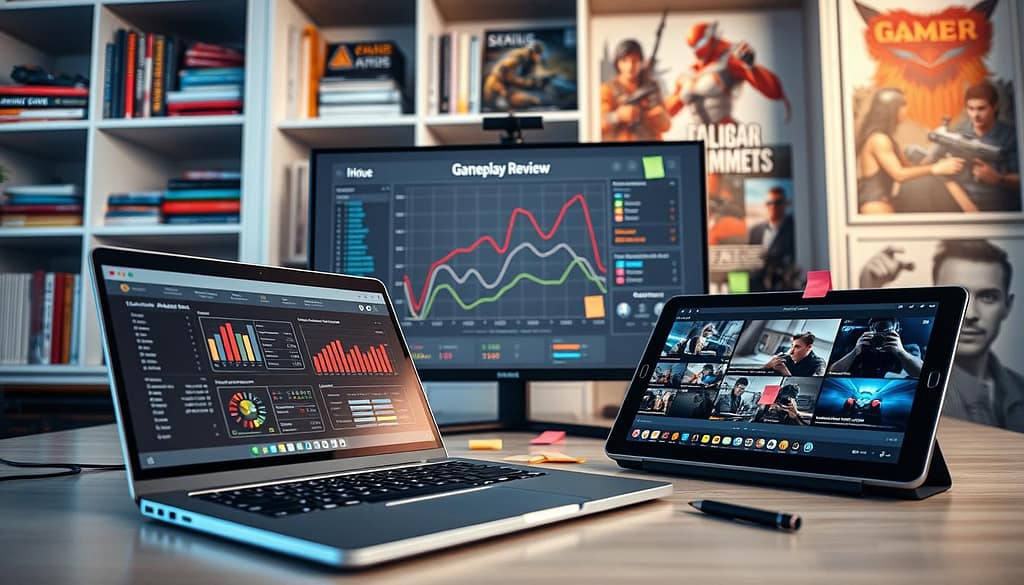
Let’s start with the basics. Most competitive games come with their own replay systems. League of Legends, StarCraft II, and Counter-Strike all offer built-in rewind features. These are your Swiss Army knives – versatile, reliable, and always available.
But sometimes you need more than a pocket knife. That’s where third-party recording software enters the picture.
OBS Studio is the free, open-source workhorse that never lets you down. Nvidia Shadowplay offers seamless recording with minimal performance impact. Elgato Game Capture delivers broadcast-quality footage for console warriors. These tools are like having your personal film crew, documenting every glorious headshot and embarrassing misclick.
Then we have the specialists. Overwolf overlays real-time stats during gameplay. Mobalytics provides deep performance analytics. Aim Lab offers targeted mechanical training. It’s like having a personal coach, statistician, and sports psychologist all in one package.
The trick isn’t using everything at once. That’s like buying every tool at Home Depot when you just need to hang a picture. Your tool selection should match your improvement goals.
| Tool Type | Best For | Examples | Skill Focus |
|---|---|---|---|
| Built-in Replays | Positioning analysis | League VOD, CS:GO Demos | Game sense |
| Recording Software | Comprehensive review | OBS, Shadowplay | Overall performance |
| Analytical Overlays | Real-time metrics | Overwolf, Mobalytics | Decision making |
| Training Tools | Mechanical skills | Aim Lab, Kovaak’s | Aim precision |
Storage matters too. High-quality recordings eat hard drive space like Pac-Man dots. Ensure you have enough capacity and set your recording quality appropriately. There’s nothing worse than capturing that perfect play in potato vision.
Your tools should serve your review process, not complicate it. The right combination turns chaotic gameplay into structured learning opportunities. Choose wisely, and your future self will thank you during the next clutch moment.
Creating a Productive Review Session
Ever watch replays like they’re Netflix shows? With snacks and half-attention? Most players fail to analyze their VODs well. They need structure and focus, like a bomb expert.
Begin with the Single Issue Focus. Choose what you want to analyze before playing. Is it your map awareness or your fights? Or maybe your resource management?
Write it down. This helps you stay focused. It’s not just watching; it’s a detailed analysis.
Be like a film director. Pause, rewind, and slow-mo important moments. Use the enemy perspective feature to see what opponents did. Watch with purpose, not just to pass the time.
Take notes seriously. It’s like studying for a big exam. Track metrics, timings, and decisions. The goal is to find truths, not just confirm your biases.
Here’s how productive versus unproductive VOD analysis sessions compare:
| Aspect | Productive Session | Unproductive Session |
|---|---|---|
| Preparation | Clear single focus written down | No specific goals or objectives |
| Viewing Approach | Active pausing and rewinding | Passive watching like a movie |
| Note-taking | Detailed metrics and observations | Mental notes only |
| Perspective | Uses enemy view feature | Only own perspective |
| Outcome | Specific improvements identified | Vague feelings about performance |
Your VOD analysis should feel like work. It’s the kind of work that makes you better. It turns failures into wins.
Remember, you’re not watching for fun. You’re doing research. Your own gameplay is the subject.
Checking for Bad Habits
Ever notice how your worst gaming mistakes feel like reruns of a show you never meant to watch? That’s your brain on autopilot, cruising down neural highways paved with bad habits. The real tragedy isn’t making mistakes—it’s making the same mistakes while convinced you’re evolving.
Pattern recognition separates casual review from genuine coaching breakthroughs. Start by hunting what I call “chronically disappointing moments”—those instances that reappear across matches like uninvited guests. Do you consistently overextend at the 3-minute mark? Does your minimap awareness vanish right before engagements?
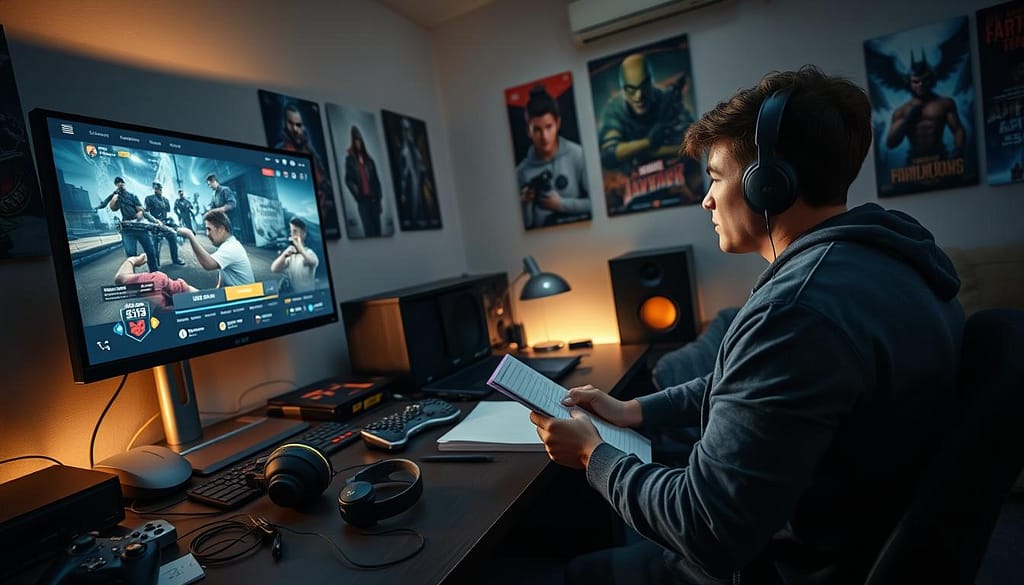
The most humbling—and valuable—perspective shift comes from watching your gameplay through your opponent’s eyes. Most replay systems let you toggle to the enemy’s viewpoint. Suddenly, your “brilliant strategies” look like transparent gambits they saw coming from three moves away.
Break down key turning points where matches swung decisively. Was it a poorly timed ultimate? A missed objective? These moments contain concentrated lessons about your decision-making under pressure.
Quantify your patterns using analytical tools like Overwolf or Mobalytics. If your death rate spikes consistently at specific timings or locations, you’ve found statistical evidence of behavioral loops needing interruption. Numbers don’t lie—they just reveal uncomfortable truths.
Comparative analysis provides the reality check we all need. Watch higher-level players handling situations where you consistently struggle. You’re not looking to copy their gameplay—you’re seeking to understand the gap between your choices and optimal decisions.
Remember: breaking bad habits isn’t about moral failure. It’s about recognizing that your brain has been taking shortcuts you never authorized. The best coaching often comes from confronting the patterns you’ve been too comfortable to notice.
Turning Analysis into Improvement
Analysis without action is like collecting cookbooks but never cooking—it looks impressive but doesn’t feed anyone. Your brilliant observations need to cross what I call the “Implementation Gap Bridge” to actually matter.
Transform your review findings into stupidly specific action items. Instead of “better positioning,” try “check minimap every 5 seconds” or “practice holding angles for 15 minutes daily.” Specificity turns vague aspirations into executable commands.
Use tools like Aim Lab or KovaaK’s as targeted training, not game substitutes. Then implement the feedback loop from hell: record, review, adjust, repeat. Track progress with corporate auditor ruthlessness—revisit old replays to measure improvement.
Effective progress tracking separates productive practice from wheel-spinning. Platforms like Simply.Coach offer structured approaches to measure what matters. Improvement isn’t linear, but as long as your trajectory points upward, you’re winning the real game against your former self.