Let’s talk about your kit. Not the one in your garage, but the one on your PMC. It’s the collection that keeps you from dying.
It’s not about having everything. It’s about choosing wisely. Think of it like a budget for your game. You pick what’s most important, like protection or firepower.
A good helmet is key for defense. But if it leaves you without ammo, you’re doomed.
Tabletop RPGs teach us a lesson. Every item has a limited time to be useful. Your armor is not just a shield; it’s something that wears out.
It’s not always about the most expensive gear. Sometimes, choosing wisely means picking Class 4 armor. It lets you move and save money for when you need it.
This is about more than just getting stuff. It’s about making smart choices. What’s the cost of that extra grenade? Is it worth giving up a CMS kit? We’ll look at your kit like a survival expert.
It begins with knowing the difference between default and custom loadouts. Every choice has its own value.
When to Engage & When to Farm
The key to surviving in a shooter game isn’t just about shooting well. It’s about making smart choices with your life as the cost. Every fight is a battle for your resources like ammo and health.
This isn’t about being afraid. It’s about smart planning. Why risk everything for something that might not be worth it? In our TTRPG, losing all health means a big penalty that takes a week to heal.
Healing is a rare resource that you can only use a few times a day. Using it on a small fight is like spending a lot of money on something small. It’s not a good investment.
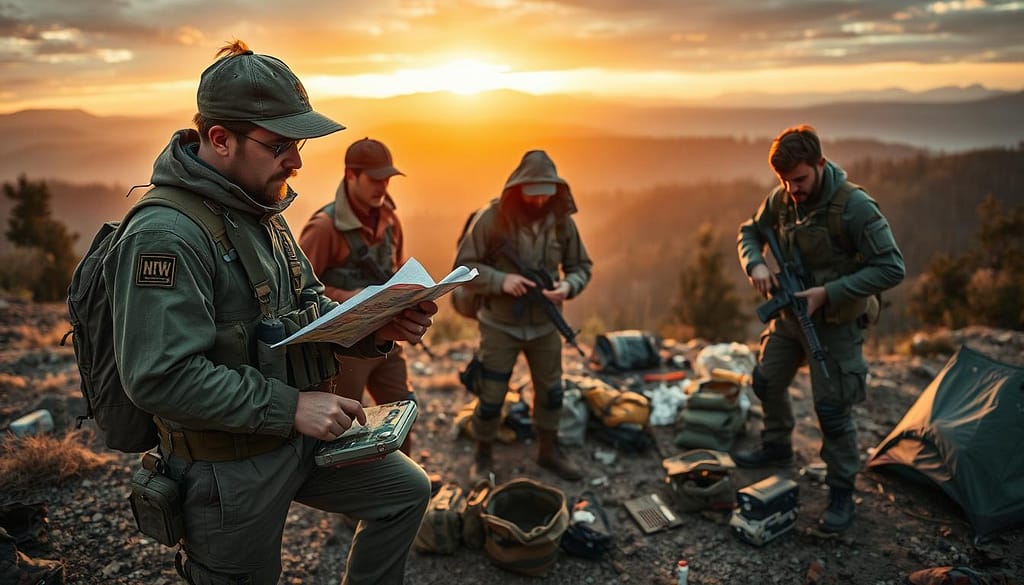
So, how do you decide if you should fight? Ask if it’s for something really important or just because you saw someone. Most of the time, the risk isn’t worth the reward.
Listening is key. The sounds of a fight can tell you a lot. A grenade pin or the sound of a gun can show you if it’s worth fighting.
Looking at an enemy’s gear is like checking their financial health. Is it a good investment or a bad one? Sometimes, the best thing to do is to leave and let others fight.
Focusing on getting loot, not fighting, is a better strategy. Here’s a simple guide to help you decide:
| Situation | Engage? | Rationale |
|---|---|---|
| Enemy is between you and a quest objective | Likely Yes | The mission payoff justifies the resource expenditure. It’s a strategic acquisition. |
| You hear unsuppressed, high-tier gunfire nearby | Almost Always No | High risk, unknown reward. Let them attract the attention. Your healing is too valuable. |
| You see a solo player with low-tier gear looting | Assess & Maybe | Low risk, but low reward. Is his loot worth your ammo and revealing your position? Often, it’s not. |
| You are low on health and have one Heal charge left | Absolutely Not | Capital preservation is key. Disengage, farm quietly, and extract. Your last medical resource is your emergency fund. |
Surviving is all about keeping your resources safe and making smart investments. Every shot you take is a risk. Every health point you get is a chance to invest again. Make smart choices, and you’ll not only survive the raid but the whole campaign.
Healing Under Fire
Think of your health items like daily spell slots. Wasting a ‘Heal’ charge in the middle of a fight is a big mistake. It’s not just a game; every CMS kit and AI-2 chew has a real cost. Healing under fire is a high-stakes ballet of animation canceling and positional awareness, where the wrong move makes you a stationary target.
Your first rule? Triage. A bleeding wound will drain your HP to zero faster than a sniper’s bullet. Stop the bleed first. Then, address the raw HP loss. It’s like an emergency room procedure: stabilize the immediate threat before treating the underlying damage.
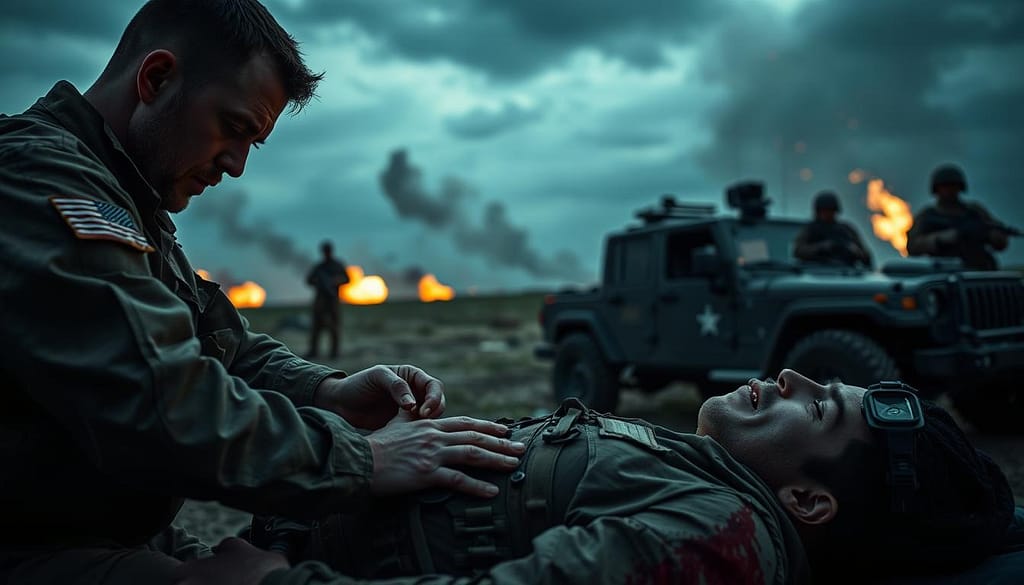
This is where your kit’s economics get tested. Do you use the expensive, fast CMS Surgical Kit on a blacked limb, or limp to cover and use a cheap AI-2? The choice defines your next thirty seconds. A poor decision leaves you poor and dead.
| Item | Speed | Relative Cost | Primary Use | Combat Viability |
|---|---|---|---|---|
| CMS Surgical Kit | Fast | High | Restores blacked limbs | High (if in cover) |
| AI-2 Medkit | Slow | Low | General HP recovery | Low (too slow) |
| IFAK | Medium | Medium | HP & Bleeding | Medium |
| Salewa | Medium | Medium-High | HP, Bleeding, Limb HP | Medium-High |
Notice the trade-offs. The CMS is your get-out-of-jail-free card for a crippling injury, but it’s a luxury good. The AI-2 is bargain-bin healing, perfect for post-fight patching. Using it in a fight is like trying to do your taxes while being mugged.
So, how do you create the space to heal? Repositioning is non-negotiable. You never heal where you got hit. Break line of sight, crawl behind hard cover, then start your animation. This is where a well-placed grenade becomes a budgetary allocation of explosive distraction. It buys you the 5-second “healing pocket” you need.
Now, let’s talk about ammo conservation. Your screen is gray, you’re panicking, and your instinct is to spray your entire magazine in the general direction of the threat. This is a fantastic way to die poor. Ammo conservation during a medical crisis means controlled bursts. It means listening for repositioning cues from the enemy instead of blindly firing. You conserve ammo by making your shots count, not by emptying your wallet into a wall.
The goal is to transform a catastrophic event into a managed crisis. You triage, you stabilize, and only then do you consider returning fire. It’s a sequence: stop the bleed, pop a painkiller after you’re in cover, then address limb damage. This disciplined approach turns a potentially deadly situation into a legendary survival story.
Sharing Supplies with Squad
Your stash is only as safe as your squad’s weakest link. Survival is a team effort, a tough test of working together. Alone, you might have lots, but you can’t use it all. Together, you can all survive by sharing what you have.
Imagine your squad’s resources as a shared treasure. This idea is familiar to gamers from games like TTRPGs. Sharing isn’t just being kind; it’s about spreading out risks. Your friend’s extra ammo helps you, and your extra repair kit helps them.
Who brings the extra fuel for your team? Who goes first to get the best shields? Saving ammo and using it wisely is a team effort. Good teamwork means you all have more to fight with.
A well-stocked squad is like a safety net for everyone. It turns individual shortages into a shared wealth. By sharing, you all have a better chance to survive longer. Your wealth and risks are together, making survival more likely.