Let’s be honest. The phrase “circle rotations” usually makes players very nervous. It’s like a fast race from the red zone to the white, with your heart racing and your health low. I’ve been there, hoping the circle gods will have mercy.
But what if I told you rotations are more like a smooth basketball move? In this move, you don’t just run. You pass to check your position. You step to get a better angle. You use a screen and call your cut. The idea is the same: depth is key.
It’s not about being fast. It’s about being deep—deep in the zone and deep in understanding the map’s flow. This is the heart of true map control. We’re switching from raw power to smart thinking.
This part will change how we see rotations. We’ll see the circle as a powerful ally, not just a threat. Like knowing a child’s rotation schema shows their spinning logic, knowing the game’s rhythm shows the logic in its chaos.
The aim is to make your next move feel like a planned play, not a desperate escape. Let’s start.
Predicting Safe Zones
Moving from guessing to knowing needs a solid plan. Geography, history, and pressure are key. It’s not about luck, but using probability wisely.
Think of yourself as the “Helper’s Helper” from that Cody Williams basketball feature. You’re not the star, but the one who sets up the play. Your job is to create advantages before they’re needed. In battle royale, this means knowing where the circle will collapse.
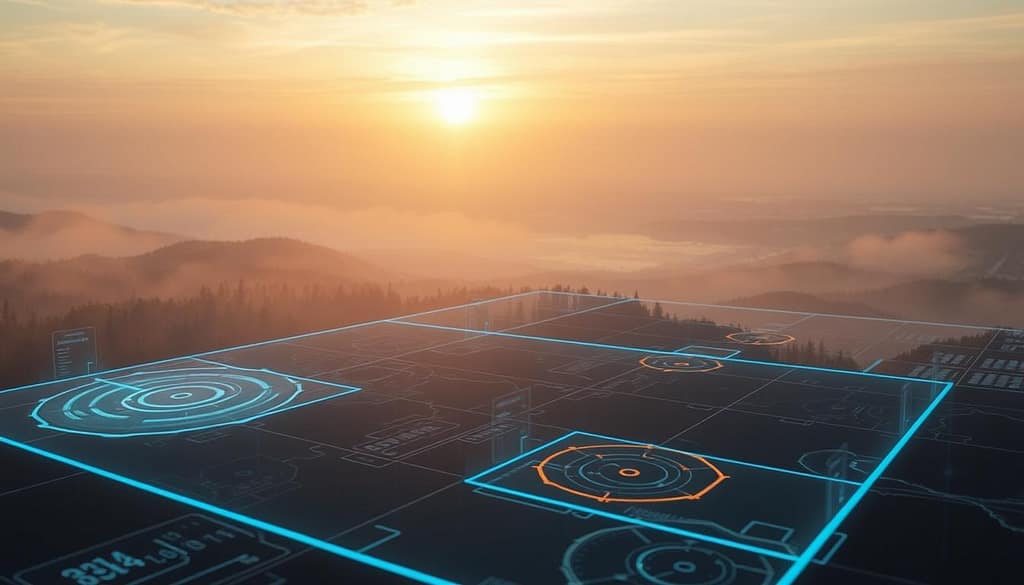
The map tells a story. Your task is to find the important parts. Look for patterns in the circle’s path. Notice where teams get wiped out.
Here’s a simple plan I follow:
- Geography: What terrain is the circle likely to collapse onto?
- History: Where have previous circles centered?
- Pressure: Where are other teams being funneled from?
Let’s dive into each part. Geography asks about the terrain. Circles often land on landmarks and high ground. Knowing this helps you plan better.
History gives you context. One circle center is random. But two or three tell a story. The game’s algorithms create patterns. Use these to guide your positioning.
Pressure analysis is about human behavior. Where are other squads likely to be? This helps you predict their moves. The best positioning considers both digital and human elements.
Combine these, and you become proactive. You’re not just reacting to the zone’s movement. You’re ready and waiting. This is the difference between being smart and being chaotic.
One approach wins. The other is just funny.
Practical application is simple. Look at the current zone’s geography. Check the history of the last two shrinks. Then, think about where enemy pressure will come from. Your ideal positioning balances all three.
Remember, the zone shrink mechanics follow rules you can learn. Master these, and your predictions become forecasts. Your positioning becomes intentional.
This framework won’t make you psychic. But it will make you prepared. And in the final circles, preparation beats luck every time.
Using Terrain for Cover
The map isn’t just where you play – it’s how you win. Every hill and valley can be a tactical advantage. You’ve chosen your destination. Now, the real test is the journey.
How do you travel without becoming a sacrificial lamb? The background becomes the foreground. Terrain stops being scenery and becomes your primary weapon.
Using cover isn’t about hiding. It’s a defensive ballet. Think of a lockdown wing defender in basketball, like Cody Williams. Analysts praise his fundamentals: “always monitoring both man and ball.”
Your circle rotations demand the same dual awareness. Track the closing zone while watching for threats. Your movement should be “comfortable and natural,” using the land’s curves to break sightlines.
A hill isn’t just an obstacle. It’s a tool to “funnel opponents into inconvenient places.” You use topography like a defender uses footwork and long arms. You guide enemies into spots where they’re vulnerable.
Smart cover use operates in layers. Not all protection is created equal.
- Hard Cover: The unbreakable stuff. Buildings, rocks, solid walls. These stop bullets completely. They’re your bunkers, but everyone knows to watch them.
- Soft Cover: The deceptive layer. Bushes, thin trees, slight dips in the ground. These might not stop a bullet, but they break your silhouette. They create doubt.
- Visual Cover: The psychological layer. Smoke grenades, shadows at certain times of day, even dust kicked up by vehicles. If they can’t see you clearly, they can’t shoot you confidently.
Elevation is your friend. The high ground isn’t just a Star Wars meme. It’s a tactical fact. Height gives you visibility and makes shooting uphill harder for your opponents. But remember: high ground also makes you a silhouette against the sky. Use it wisely.
Chokepoints are double-edged swords. A narrow bridge or a single mountain pass funnels everyone. You can use this to ambush others. You can also use the knowledge that others will avoid it. Sometimes the most exposed route is the least watched. It’s counterintuitive, but true.
The lack of cover can be its own strategy. Open fields seem suicidal. Yet, if no one expects you there, and you move fast, you might just slip through. It’s all about controlling angles and being unpredictable.
Your goal is to become a frustratingly difficult target. Make every step of your circle rotation a puzzle for enemies. Use the land not as a place to be, but as a tool to win. Now, let’s talk about when to make your move.
Timing Rotations
If positioning is chess, then timing is jazz—it’s all about rhythm. You can memorize every rotation path, but without the right tempo, it’s just noise. It’s not a simple “go/stop” command. It’s a mix of pace and pause.
Imagine a point guard breaking down a defense. Cody Williams’ game showed that changing speeds and toying with pace is key. Do you burst immediately or let others exhaust themselves first?

Your equipment sets your rhythm. An Octane stim or a Valkyrie ult lets you make a late, dramatic entrance. Your choice is about syncing your internal clock with your tools.
Think of the audio landscape—a masterclass in masking. A well-timed rotation can blend into the background of a distant fight. The gunfire that screams “danger” to others can whisper “opportunity” to you. This is where savvy truly pays off.
Let’s look at the three main rhythms:
- The Early Power Position Grab: You move before others. This is risky but rewarding. It needs aggressive confidence.
- The Medium-Tempo Center-Edge Weave: You move with the flow but not in it. You skirt conflicts, using micro-rotations to maintain advantage. This is the rotational calculus of minimizing exposure while maximizing options.
- The Late-Game “Gatekeep and Sweep”: You let the zone do the work. You position to punish those who rotated poorly, then clean up the remnants. This requires immense patience and precision.
Each scenario needs a different internal metronome. The early grab is staccato. The medium weave is syncopated. The late gatekeep is slow and deliberate.
Mastering timing means understanding that the most powerful move is often the one you don’t make… yet. It’s the pause that creates the opening. It’s the hesitation that becomes the feint. Your positioning is the destination, but your timing is the journey. Nail both, and you’re not just playing the game—you’re composing it.
Avoiding Ambushes
You can do everything right and yet get caught off guard. Avoiding ambushes is the ultimate skill. It’s about making smart moves to stay alive and turn others’ successes into failures.
Learn to sense where traps might be. Watch for things like windows or rocks that could be hiding spots. Your ears and the kill feed are your best tools for gathering information. If a big fight happened in Canyon, the winners might be hiding nearby.
True map control means more than just holding your ground. It’s about stopping others from moving where they want. Sometimes, the best way to avoid getting caught is to set a trap yourself. Stand where everyone expects you to be and surprise them instead. This way, you make the circle feel smaller for everyone else.
This concludes our guide on mastering safe rotations. We’ve covered everything from predicting zones to using terrain and timing. Stay alert, unpredictable, and take control of the map.